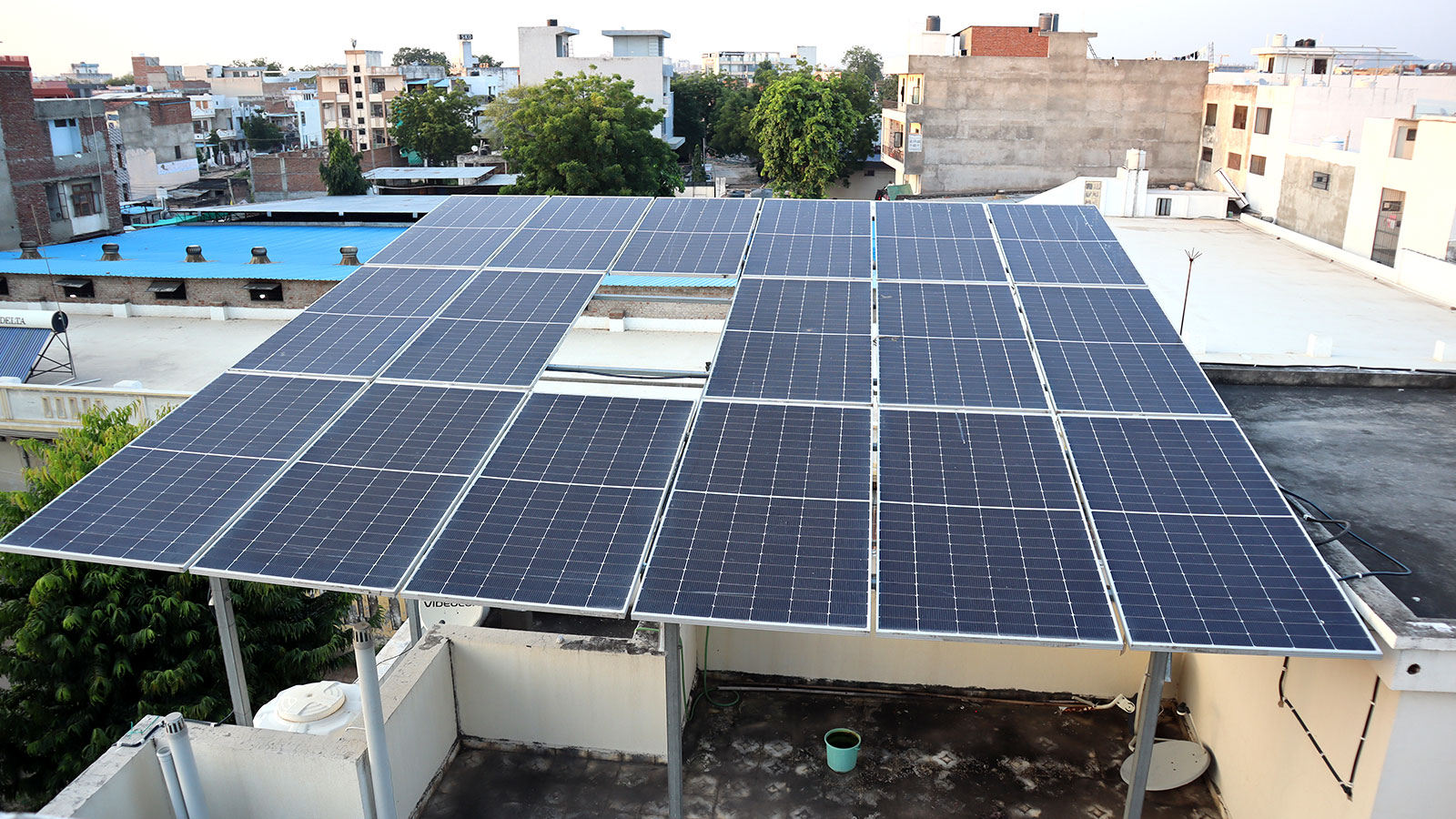
An on-grid solar system uses solar panels and a grid-tied inverter to generate electricity from sunlight. The generated power can be used by your property, while the utility grid supplies electricity whenever solar generation is not enough to meet your requirements.
At Shree Balaji Solar, we help you understand the right on-grid configuration based on your electricity consumption, available rooftop space, site conditions and applicable DISCOM connection requirements.
Generate electricity on-site and potentially reduce the amount of electricity you purchase from the utility grid.
Make use of abundant sunlight to generate clean and renewable electricity.
Make productive use of suitable rooftop space to generate clean electricity for your property.
Support cleaner energy generation and reduce dependence on conventional power sources.
An on-grid system works in coordination with the utility supply, subject to applicable DISCOM regulations and approvals.
Invest in a solar system designed for long-term electricity generation with suitable maintenance.

Solar panels convert sunlight into direct current (DC) electricity. A grid-tied inverter converts it into alternating current (AC), which can be used by your connected electrical loads.
Photovoltaic panels convert sunlight into direct current electricity.
The inverter converts DC electricity into AC electricity for compatible appliances and electrical loads.
Solar electricity is supplied to your property's connected loads while the system is generating power.
When solar generation is insufficient, electricity can be drawn from the utility grid. Surplus export, where permitted, follows applicable net-metering regulations and DISCOM rules.
Understand your electricity consumption, rooftop space and solar energy requirements.
Check rooftop condition, orientation, shading and installation feasibility.
Select suitable system capacity, panel layout and inverter configuration based on your electricity requirements.
Install solar panels, mounting structures, grid-tied inverter, cabling and required electrical protection equipment.
Test the system and complete applicable grid-connection, inspection and commissioning formalities.
Every property has different electricity requirements. Contact our team to discuss system capacity, rooftop suitability, grid connectivity and a project-specific quotation.
An on-grid system may be suitable for properties with a reliable utility connection and an appropriate installation area. Suitability depends on electricity usage, roof condition, shading and local DISCOM requirements.
Space requirements depend on system capacity, panel wattage, mounting layout and site conditions. A site assessment helps determine the suitable rooftop area.
Yes. Solar panels can generate electricity under cloudy conditions, although production is generally lower than on clear sunny days.
Solar panels do not generate electricity at night. An on-grid system draws electricity from the utility grid when solar generation is unavailable. Standard on-grid systems do not provide backup during a grid outage.
PM Surya Ghar: Muft Bijli Yojana is a residential rooftop solar scheme. Eligible residential consumers may receive assistance subject to current scheme guidelines and official approval. Commercial and industrial connections are not covered by this residential subsidy.
View Government Scheme DetailsPeriodic cleaning, visual inspection and performance monitoring help maintain efficient solar system operation. Maintenance frequency depends on local dust and weather conditions.
Contact Shree Balaji Solar to discuss your rooftop, electricity requirements and on-grid solar installation.